Every January 1st, my kitchen fills with the warm, sweet aroma of baking bread – the unmistakable scent of Greek New Year’s traditions coming to life. This isn’t just any bread; it’s vasilopita, our family’s cherished greek new years bread recipe that promises prosperity and good fortune to whoever finds the hidden coin in their slice. I can still picture my yia-yia carefully wrapping that lucky drachma in foil, her flour-dusted fingers pressing it deep into the dough as we all gathered around her kitchen table.
This golden loaf means more than just delicious breakfast – it’s edible hope. The round shape represents life’s cyclical nature, while the sesame seeds topping it symbolize abundance. My favorite childhood memory? Watching my cousins’ faces light up when someone discovered the coin, believing (as we all did) that this meant their year would be magical.
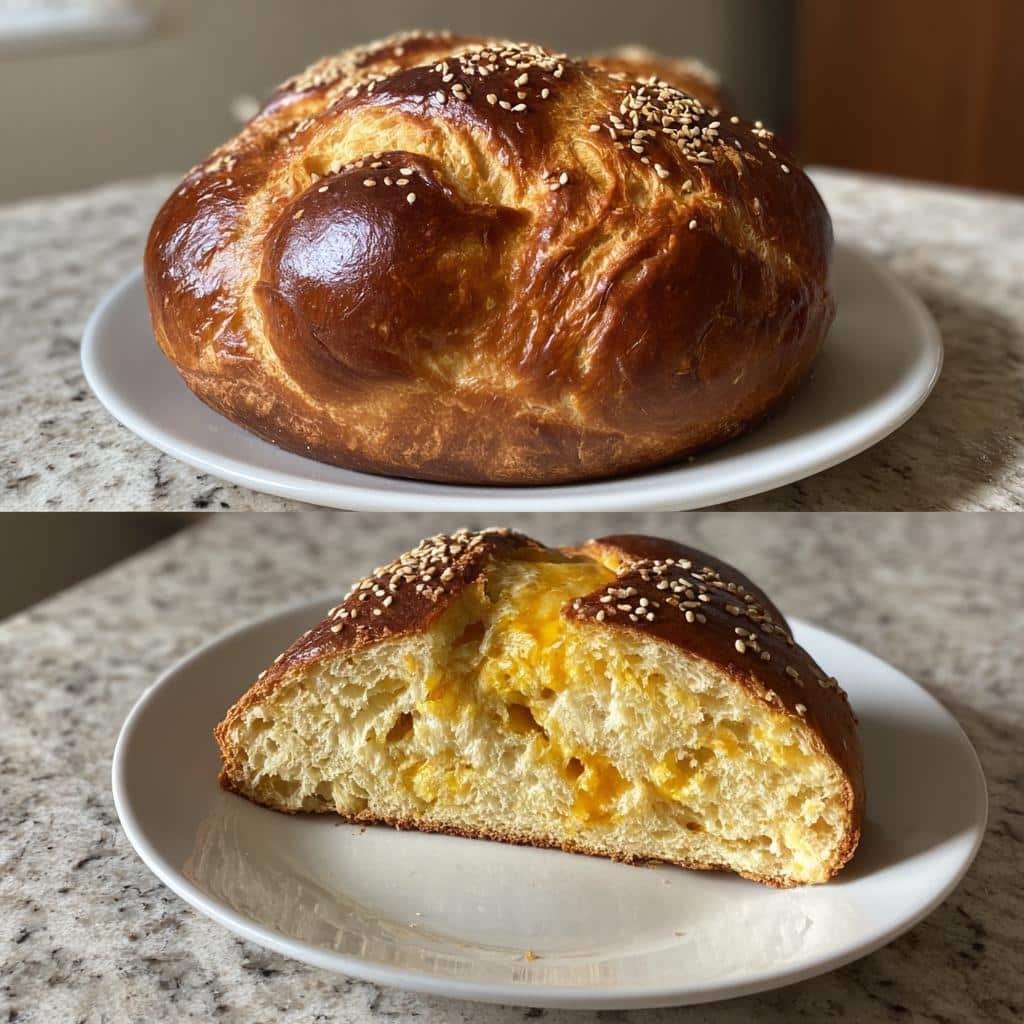
What makes this greek new years bread recipe so special isn’t just the tender crumb or the subtle citrus notes from orange zest – it’s how one simple loaf connects generations. Whether you’re continuing family traditions or starting new ones, baking this bread fills your home with more than wonderful smells; it creates moments that become stories told year after year.
Why You’ll Love This Greek New Year’s Bread Recipe
Trust me, this isn’t your average loaf of bread – it’s a slice of Greek tradition that’s as meaningful as it is delicious. Here’s why this recipe will become your new January favorite:
- That authentic flavor: The blend of orange zest, mahlepi, and mastic creates a subtly sweet, citrusy aroma that’ll transport you straight to a Greek bakery
- Easier than you think: With simple ingredients and straightforward steps, even beginner bakers can nail this recipe (my 12-year-old niece did!)
- Good luck charm: That hidden coin turns every slice into an exciting chance game – whoever finds it gets bragging rights for best year ever
- Showstopper presentation: The golden, sesame-studded crust looks so impressive, no one will believe you made it yourself
- Versatile treat: Perfect for breakfast with coffee, as an afternoon snack with tea, or even dessert with a drizzle of honey
The best part? Every bite connects you to centuries of Greek tradition – and maybe starts some delicious new ones in your own home.
Ingredients for Greek New Year’s Bread
Gathering these simple ingredients is like collecting little promises of good fortune for the new year. Here’s what you’ll need to make your own lucky loaf:
- Dry ingredients:
- 4 cups all-purpose flour (spooned and leveled)
- 1/2 cup granulated sugar
- 1 teaspoon salt
- 1 tablespoon active dry yeast
- Wet ingredients:
- 1/2 cup warm milk (about 110°F)
- 1/2 cup warm water
- 2 large eggs, at room temperature
- 1/4 cup unsalted butter, melted and cooled
- 1 teaspoon vanilla extract
- Flavor boosters:
- 1 teaspoon freshly grated orange zest
- 1/4 teaspoon mahlepi (optional – see notes)
- 1/4 teaspoon ground mastic (optional – see notes)
- For topping:
- 1 egg yolk beaten with 1 teaspoon water
- 1 tablespoon sesame seeds
- 1 clean coin (I use a quarter) wrapped tightly in foil
Ingredient Notes & Substitutions
Don’t panic if you can’t find mahlepi or mastic – these traditional Greek spices add authentic flavor but the bread will still be delicious without them. If you want to experiment, try substituting 1/2 teaspoon cinnamon mixed with a pinch of nutmeg.
That foil-wrapped coin? It’s non-negotiable! Any clean coin will work – just make sure it’s sealed tightly in foil (we don’t want anyone actually biting into metal). For dairy-free versions, swap the milk for almond milk and use olive oil instead of butter – though I’ll admit, it won’t be quite as rich. The bread still makes everyone smile, substitutions and all.
How to Make Greek New Year’s Bread
Now comes the fun part – turning these simple ingredients into a golden loaf of good fortune! Don’t let the multiple steps fool you; making this bread is easier than pronouncing “vasilopita” correctly on your first try (trust me, I’ve been there). Just follow these steps, and you’ll have a beautiful bread that’ll impress your family and maybe even bring you some luck!
- Wake up your yeast: In a small bowl, dissolve the yeast in warm milk and water (think baby bottle temperature – too hot kills it!). Let it sit for about 5 minutes until it gets foamy like a tiny cappuccino. This means your yeast is alive and ready to work its magic.
- Mix the dry team: In your largest mixing bowl, whisk together the flour, sugar, salt, and those special spices if you’re using them. I always take a deep inhale at this point – that mahlepi scent is heavenly!
- Bring everyone together: Make a well in your dry ingredients and pour in the yeast mixture along with the eggs, melted (but cooled!) butter, vanilla, and orange zest. Use a wooden spoon to stir until a shaggy dough forms.
- Knead with love: Turn the dough onto a lightly floured surface and knead for about 8-10 minutes. You’ll know it’s ready when it transforms from sticky mess to smooth, elastic ball that springs back when poked. Pro tip: If your arms get tired, think of all the good luck you’re kneading in!
- First rise: Place the dough in a greased bowl, cover with a clean towel, and let it rise in a warm spot until doubled – usually 1-2 hours depending on your kitchen temperature. My secret? I sometimes let it rise overnight in the fridge for extra flavor development.
- Shape with intention: Punch down the dough (very satisfying!) and shape it into a smooth round loaf. Here’s where you’ll tuck in that foil-wrapped coin – press it deep into the center from the bottom so it stays hidden.
- Second rise: Place your shaped loaf on a parchment-lined baking sheet, cover, and let it rise again for about 30 minutes. It won’t double this time, but you’ll notice it’s puffier.
- Bake to golden perfection: Brush the top with egg yolk wash (this gives that beautiful shine), sprinkle generously with sesame seeds, and bake at 350°F for 30-40 minutes until deeply golden brown and sounds hollow when tapped.
Shaping and Baking Tips
When shaping your loaf, imagine you’re forming a perfect circle of good fortune – smooth and tight is what you want. For extra insurance against sticking, I always use parchment paper under my loaf. That egg wash? Don’t skip it! It’s the secret to that professional bakery shine. And those sesame seeds? Press them gently into the egg wash so they don’t all roll off during baking. Watch your oven temperature carefully – too hot and the outside browns before the inside cooks. I keep an oven thermometer in mine because dials lie!
Serving and Storing Greek New Year’s Bread
Oh, that magical moment when you first slice into the warm, golden loaf! I always serve our greek new years bread fresh from the oven, letting the sweet aroma fill the room. Cut thick slices and drizzle them with honey or spread on some tart orange marmalade – the flavors dance together perfectly. For the full tradition, have the oldest family member make the first ceremonial cut while everyone watches for that telltale *clink* of the hidden coin.
Leftovers? They rarely happen in my house, but if you’re lucky enough to have some, wrap the bread tightly in foil or store in an airtight container for up to 3 days. To bring back that fresh-baked magic, pop slices in the toaster or warm them in a 300°F oven for 5 minutes. Just remember – that lucky coin might be hiding in any slice, so bite carefully when reheating!
Greek New Year’s Bread FAQs
I’ve gotten so many questions about this special bread over the years – here are the ones that pop up most often:
“Can I freeze Greek New Year’s bread?” Absolutely! Wrap the completely cooled loaf tightly in plastic wrap, then foil, and freeze for up to 2 months. Thaw at room temperature (still wrapped) overnight. For that fresh-baked feel, warm slices in a 300°F oven for a few minutes.
“What if I can’t find mahlepi or mastic?” Don’t worry – your bread will still be delicious! I sometimes substitute 1/2 teaspoon cinnamon with a pinch of nutmeg or cardamom. The orange zest brings plenty of bright flavor on its own. If you are interested in learning more about traditional Greek spices, you can look into resources on authentic Greek spice blends.
“Why the coin tradition?” That lucky coin (we call it the “flouri”) symbolizes prosperity – whoever finds it in their slice is said to have good fortune all year! My yia-yia insisted the coin should go to the family’s breadwinner, but in our house, we playfully argue over who “deserves” it most.
“Can I make this in advance?” The dough actually improves with an overnight rise in the fridge! Just shape and bake it on New Year’s Day – the extra time develops deeper flavor. The baked bread keeps well for 2-3 days too. If you are looking for other ways to incorporate citrus into your baking, you might enjoy this strawberry lassi drink recipe for a refreshing contrast.
Estimated Nutritional Information
Each generous slice of this Greek New Year’s bread comes in at about 220 calories – not bad for such a celebratory treat! Here’s the breakdown per serving (based on 10 slices): 5g fat (3g saturated), 38g carbs, 1g fiber, 5g protein, and 10g sugar. Remember, these values are approximate and will vary slightly depending on your exact ingredients and slice size. That lucky coin? Zero calories but priceless in good fortune!
Share Your Greek New Year’s Bread
I’d love to hear how your Greek New Year’s bread turns out! Did someone special find the coin? Tag your photos with #GreekNewYearsBread so I can see your beautiful creations. Better yet – leave a comment sharing your family’s New Year traditions. Every loaf tells a story, and I can’t wait to read yours!
Print
Magical Greek New Year’s Bread Recipe for Good Luck
- Total Time: 2 hours 10 min (includes rising)
- Yield: 1 loaf (10 servings) 1x
- Diet: Vegetarian
Description
A traditional Greek New Year’s bread, symbolizing prosperity and good luck for the coming year.
Ingredients
- 4 cups all-purpose flour
- 1/2 cup sugar
- 1 tsp salt
- 1 tbsp active dry yeast
- 1/2 cup warm milk
- 1/2 cup warm water
- 2 eggs
- 1/4 cup melted butter
- 1 tsp vanilla extract
- 1 tsp orange zest
- 1/4 tsp mahlepi (optional)
- 1/4 tsp mastic (optional)
- 1 egg yolk (for glaze)
- 1 tbsp sesame seeds
- 1 coin (wrapped in foil)
Instructions
- Dissolve yeast in warm milk and water. Let sit for 5 minutes until foamy.
- In a large bowl, mix flour, sugar, salt, and spices.
- Add eggs, melted butter, vanilla, and orange zest to the yeast mixture.
- Combine wet and dry ingredients to form a dough. Knead until smooth.
- Let the dough rise in a greased bowl for 1-2 hours until doubled.
- Punch down the dough and shape it into a round loaf. Insert the coin.
- Place on a baking sheet. Let rise for 30 minutes.
- Brush with egg yolk and sprinkle sesame seeds.
- Bake at 350°F (175°C) for 30-40 minutes until golden brown.
- Cool before slicing.
Notes
- The coin brings luck to whoever finds it in their slice.
- Mahlepi and mastic add traditional flavor but can be omitted.
- Serve with honey or jam.
- Prep Time: 30 min
- Cook Time: 40 min
- Category: Bread
- Method: Baking
- Cuisine: Greek
Nutrition
- Serving Size: 1 slice
- Calories: 220
- Sugar: 10g
- Sodium: 150mg
- Fat: 5g
- Saturated Fat: 3g
- Unsaturated Fat: 2g
- Trans Fat: 0g
- Carbohydrates: 38g
- Fiber: 1g
- Protein: 5g
- Cholesterol: 45mg
Keywords: greek new years bread, vasilopita recipe, greek sweet bread