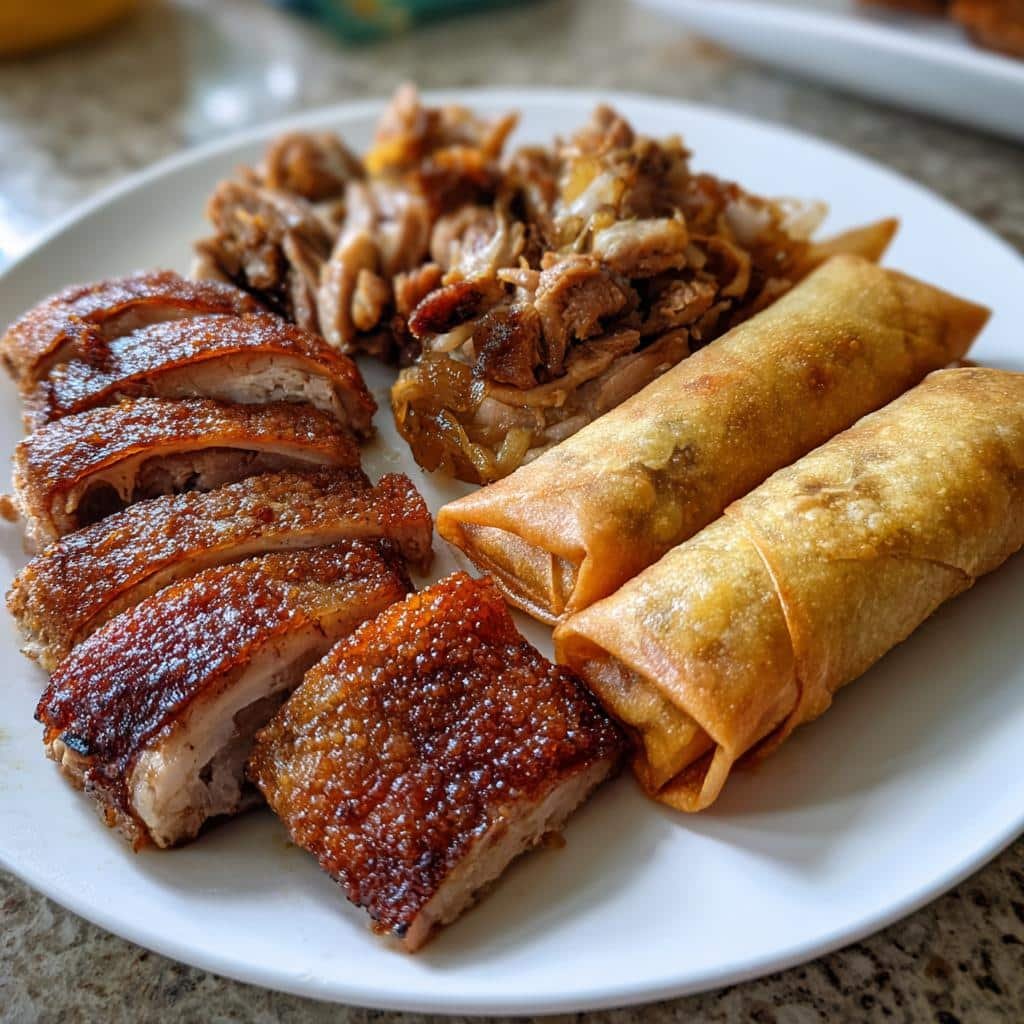
There’s nothing quite like the buzz of a Filipino New Year’s Eve kitchen—the sizzle of lechon kawali in hot oil, the tangy aroma of adobo simmering on the stove, and the joyful chaos of relatives wrapping lumpia at the dining table. Growing up, our family believed these Filipino New Year’s Eve food recipes weren’t just meals; they were edible wishes for prosperity, long life, and happiness in the coming year.
I’ll never forget my Lola’s hands swiftly rolling pancit noodles with shrimp while lecturing us kids about how long noodles mean long life. “Don’t you dare cut them!” she’d scold, waving her wooden spoon. Every crispy bite of lumpia represented wealth (the golden color mimicking gold bars), while the circular shape of lechon kawali on our plates symbolized never-ending good fortune.
These dishes connect us—to tradition, to each other, and to the hopeful promise that next year will be even sweeter than the last. Whether you’re Filipino or just craving these vibrant flavors, these recipes turn any New Year’s Eve into a celebration bursting with meaning (and incredible taste).
Why You’ll Love These Filipino New Year’s Eve Food Recipes
Trust me, once you try these dishes, you’ll understand why they’re non-negotiable at every Filipino New Year’s Eve table. Here’s what makes them so special:
- Instant nostalgia: These recipes carry generations of family stories in every bite
- Flavor fireworks: From crispy to tangy to savory, your taste buds won’t know what hit them
- Surprisingly simple: Don’t let the impressive results fool you – the techniques are totally doable
- Built-in portion control: Make extra because leftovers taste even better the next day
Celebrating with Meaningful Dishes
Every ingredient tells a story! The long pancit noodles symbolize long life (never cut them!), while golden lumpia resemble wealth-building gold bars. Circular lechon kawali represents endless prosperity – we always arrange it in the center of the table like edible good luck.
Crowd-Pleasing Flavors
That perfect crunch of lechon kawali skin? The tangy punch of adobo sauce? The way pancit noodles soak up all the shrimp and veggie flavors? It’s magic. These dishes balance textures and tastes so beautifully that even picky eaters come back for seconds.
Essential Ingredients for Filipino New Year’s Eve Food Recipes
Okay, let’s talk ingredients—because getting this right is half the battle (*wink*). Here’s your shopping list, organized by dish so you don’t miss a thing. Pro tip: hit up an Asian market for the best lumpia wrappers and rice noodles; they make ALL the difference!
For the Lechon Kawali (Crispy Pork Belly):
- 1 kg pork belly – skin-on, cut into 2-inch chunks (that crispy skin? Non-negotiable!)
- 5 cloves garlic – minced (or 1 tbsp if you’re using pre-minced, no judgment!)
- 1/2 cup soy sauce – use Filipino brands like Silver Swan for authentic flavor
- 1/4 cup vinegar – cane or coconut vinegar preferred, but white works in a pinch
- 1 tbsp black peppercorns – lightly crushed (Lola says whole > ground here)
For the Chicken Adobo:
- 500 g chicken thighs – bone-in, skin-on for maximum juiciness
- 1/2 cup soy sauce – same as above, go Filipino-brand if possible
- 1/4 cup vinegar – don’t mix with the lechon’s vinegar portion!
- 3 bay leaves – the secret umami booster
For the Pancit & Lumpia:
- 2 cups rice noodles – bihon or canton noodles, soaked per package
- 200 g shrimp – peeled, deveined (or sub chicken if seafood’s not your thing)
- 1 cup mixed veggies – julienned carrots, shredded cabbage, snap peas
- 1 pack lumpia wrappers – thawed if frozen (keep covered with damp cloth!)
- 1 cup ground pork – 80/20 fat ratio for juicy filling
See? Not crazy at all! Just fresh, flavorful stuff that’ll make your New Year’s spread sing. 🌟
Equipment You’ll Need
Don’t stress—you probably have most of this in your kitchen already! Here’s what you’ll need to pull off these Filipino New Year’s Eve recipes like a pro:
- Deep fryer or heavy pot – for that perfect lechon kawali crunch
- Large mixing bowls – one for adobo marinade, one for lumpia filling
- Wok or wide skillet – essential for tossing pancit noodles
- Tongs & slotted spoon – your best friends for frying
- Kitchen thermometer – because oil temperature is everything
How to Make Filipino New Year’s Eve Food Recipes
Alright, let’s get cooking! I’ll walk you through each dish step by step—just like my Lola taught me. Pro tip: start with the lechon kawali and adobo since they need time to marinate, then move to the pancit and lumpia. Trust me, your kitchen will smell absolutely incredible!
Preparing Lechon Kawali
- Marinate the pork belly: In a big bowl, mix pork chunks with soy sauce, vinegar, garlic, and crushed peppercorns. Massage it all in like you’re giving the meat a little spa treatment! Cover and refrigerate for at least 2 hours (overnight is even better).
- Boil it first: Transfer pork and marinade to a pot, add water to cover, and simmer for 45 minutes until tender. This step is KEY—it renders the fat so you get that perfect crisp later.
- Dry completely: Pat each piece bone-dry with paper towels. Any moisture = oil splatters = sad cook! Let them air-dry 10 minutes while heating oil to 375°F in your deepest pot.
- Fry to golden perfection: Carefully lower 3-4 pieces at a time (don’t crowd the pot!). Fry 5-7 minutes until the skin puffs up and turns crackling golden. Drain on a rack—not paper towels—to keep the crunch.
Cooking Chicken Adobo
- Brown the chicken: In a cold pan, arrange chicken skin-side down. Turn heat to medium and let the fat render slowly for 5 minutes until golden. Flip and sear the other side 3 minutes.
- Simmer in magic sauce: Pour in soy sauce, vinegar, garlic, bay leaves, and peppercorns. Don’t stir yet—let the vinegar cook off for 2 minutes (this prevents that raw vinegar taste). Add 1 cup water, bring to a boil, then reduce to a gentle simmer for 30 minutes.
- Reduce the sauce: Remove chicken and boil the liquid 5 more minutes until it thickens slightly. Pour it back over the chicken—that glossy, tangy glaze is what dreams are made of!
Stir-Frying Pancit
- Prep noodles: Soak rice noodles in warm water 15 minutes until flexible but still firm. Drain well—wet noodles make soggy pancit!
- Sauté the good stuff: Heat oil in a wok over high heat. Add shrimp and cook 1 minute per side. Toss in veggies and garlic, stir-frying just until crisp-tender (about 2 minutes).
- Bring it all together: Add drained noodles, soy sauce, and a splash of chicken broth. Use two wooden spoons to toss everything like you’re flipping pancakes—this prevents breaking the noodles. Cook 3 minutes until heated through.
Frying Lumpia
- Wrap like a pro: Place a heaping tablespoon of pork filling near the bottom corner of a wrapper. Fold sides in, then roll tightly away from you—think “cigar shape.” Seal the edge with a dab of water or egg wash.
- Fry in batches: Heat 2 inches of oil to 350°F. Fry 4-5 lumpia at a time, turning occasionally, for 3-4 minutes until golden brown. Drain on a rack (again, no paper towels—we want them crispy, not soggy!).
- Serve immediately: These are best piping hot with sweet chili sauce for dipping. Warning: they disappear FAST—I always hide a few for myself!
Tips for Perfect Filipino New Year’s Eve Food Recipes
Listen, after years of New Year’s Eve kitchen chaos (and a few crispy disasters!), I’ve learned these game-changing tricks that’ll make your dishes shine:
- Dry that pork twice: After boiling lechon kawali, pat it dry, then let it air-dry 10 minutes before frying. Water and hot oil don’t mix—trust me!
- Lumpia wrapper love: Keep wrappers under a damp towel while working—they dry out faster than you can say “Happy New Year!”
- Adobo patience: Don’t stir that vinegar right away! Let it cook off for 2 minutes to avoid that sharp raw taste.
- Pancit power move: Toss noodles with oil immediately after draining to prevent sticking.
Bonus? Always make extra lumpia—they vanish faster than midnight fireworks! If you are interested in other ways to boost your health goals this year, you might look into the natural Ozempic drink options.
Serving Suggestions
Oh, presentation is everything when it comes to Filipino New Year’s Eve feasts! Here’s how I make our table look as joyful as it tastes:
- Rice is life: Serve everything with mountains of steamed jasmine rice—it soaks up all those glorious adobo and pancit flavors.
- Sauce stations: Put out small bowls of spiced vinegar for lechon kawali, sweet chili sauce for lumpia, and extra adobo broth for drizzling.
- Lucky layout: Arrange lechon kawali in a circle (for prosperity!), pancit noodles draped long (for long life!), and lumpia stacked like gold bars (for wealth!).
- Color pop: Garnish with sliced green onions and calamansi wedges—that bright green and yellow scream celebration!
Pro tip: Use banana leaves as placemats for that authentic fiesta vibe—and easy cleanup! For another festive drink idea, check out this easy Hugo Spritz recipe.
Storing and Reheating
Here’s the good news—these dishes taste amazing as leftovers! Store everything in airtight containers in the fridge for up to 3 days. For that just-cooked magic, reheat lechon kawali and lumpia in a 375°F oven for 10 minutes (this brings back the crunch!). Adobo and pancit? Just warm them gently in a pan with a splash of water—they’ll taste like you made them fresh. Pro tip: freeze extra lumpia before frying—they’ll be your secret New Year’s gift to future-you!
Nutritional Information
Okay, let’s be real—New Year’s feasts aren’t diet food, but everything in moderation, right? Here’s the scoop (per serving, give or take): about 450 calories, with that glorious 25g protein from all the pork and shrimp. Keep in mind: nutrition varies based on ingredients and portion sizes—these are just happy estimates! Want lighter versions? Try baking lumpia or skimming adobo fat. But hey, it’s a celebration—live a little! If you are curious about how certain ingredients affect your body, you might want to read up on bariatric seed trick.
Frequently Asked Questions
You’ve got questions? I’ve got answers! Here are the most common things people ask me about these Filipino New Year’s Eve food recipes—straight from my kitchen to yours:
Can I bake lumpia instead of frying?
Absolutely! Brush them with oil and bake at 400°F for 15-20 minutes, flipping halfway. They won’t get *quite* as crispy as fried, but they’ll still be delicious. Pro tip: Use an oven-safe rack so air circulates underneath!
How do I prevent soggy lechon kawali?
The secret? Dry, dry, dry! After boiling, pat the pork belly aggressively with paper towels, then let it air-dry 10 minutes before frying. And never overcrowd the oil—that temperature drop is the enemy of crispiness!
My adobo tastes too vinegary—what went wrong?
Ah, the classic rookie mistake! You probably stirred the vinegar immediately. Let it cook undisturbed for 2 minutes first—that raw edge will mellow right out. Next time, taste before adding all the vinegar—you can always add more!
Can I make pancit ahead of time?
You can, but noodles keep absorbing liquid! Cook everything except the noodles, then stir-fry them together last minute. Leftover pancit? Revive it with a splash of broth in a hot pan—good as new!
Share Your Celebration
Nothing makes me happier than seeing your Filipino New Year’s Eve feasts come to life! Snap a photo of your crispy lechon kawali or perfectly rolled lumpia and tag me—I’ll be cheering you on from my kitchen. Don’t forget to rate the recipes too—your tips might help another home cook nail their celebration spread!
Print
5 Must-Try Filipino New Year’s Eve Food Recipes for Good Fortune
- Total Time: 3 hours
- Yield: 6 servings 1x
- Diet: Halal
Description
Traditional Filipino dishes for New Year’s Eve celebrations.
Ingredients
- 1 kg pork belly (lechon kawali)
- 500 g chicken (adobo)
- 1 cup soy sauce
- 1/2 cup vinegar
- 5 cloves garlic (minced)
- 1 tsp black peppercorns
- 2 cups rice (for pancit)
- 200 g shrimp (for pancit)
- 1 cup mixed vegetables (carrots, cabbage)
- 1 pack lumpia wrappers
- 1 cup ground pork (for lumpia)
Instructions
- Marinate pork belly in soy sauce, vinegar, garlic, and peppercorns for 2 hours.
- Deep-fry pork belly until crispy for lechon kawali.
- Simmer chicken in soy sauce, vinegar, and garlic for adobo.
- Boil rice noodles and stir-fry with shrimp and vegetables for pancit.
- Wrap ground pork in lumpia wrappers and deep-fry until golden.
Notes
- Serve dishes hot for best flavor.
- Prepare ingredients ahead to save time.
- Adjust seasoning to taste.
- Prep Time: 1 hour
- Cook Time: 2 hours
- Category: Main Course
- Method: Frying, Simmering
- Cuisine: Filipino
Nutrition
- Serving Size: 1 plate
- Calories: 450
- Sugar: 2 g
- Sodium: 800 mg
- Fat: 20 g
- Saturated Fat: 7 g
- Unsaturated Fat: 10 g
- Trans Fat: 0 g
- Carbohydrates: 40 g
- Fiber: 3 g
- Protein: 25 g
- Cholesterol: 80 mg
Keywords: Filipino New Year food, lechon kawali, adobo, pancit, lumpia